 Views
Views- Home
- News & Views
- Transport Planning Day: Future Proofing Our Transport Networks
By Alice Temple and Saloni Jaisingh
The spatial development strategy for Greater London, The London Plan, has projected that the capital’s population will increase by 70,000 people per year, predicting it will agglomerate to 10.8 million inhabitants by 2041. Responsible development in the city is crucial to ensuring that infrastructure can accommodate the rising population.
On the 14th of November, we are celebrating Transport Planning Day. This annual event brings attention to development directives in the profession. This year’s Transport Planning Day theme focuses on ‘Future Proofing’ transport networks in anticipation of new urban demands, encouraging exploration of topics such as the impact of climate change in addition to population growth.
How can the landscape of our capital be future proofed to adapt to the community’s evolving urban demands?
At Curtins, key to our role as place makers is to enhance the built environment. When reconciling ideas of future growth with the planning of current developments, it is imperative that we consider the durability and sustainability of transportation infrastructure. Not only is this to protect future development, but also to relieve vehicle congestion and make more efficient use of space for the local communities that we serve.
Data from the London Assembly shows that 43% of car trips are linked to taking children to and from school. In city locations that are highly accessible, we should be moving away from a heavy reliance on vehicles and instead move towards fostering an environment for active travel. A car-free cityscape will allow for more connected urban activity, such as increased public transportation, pedestrian movement, and increased community cohesion.


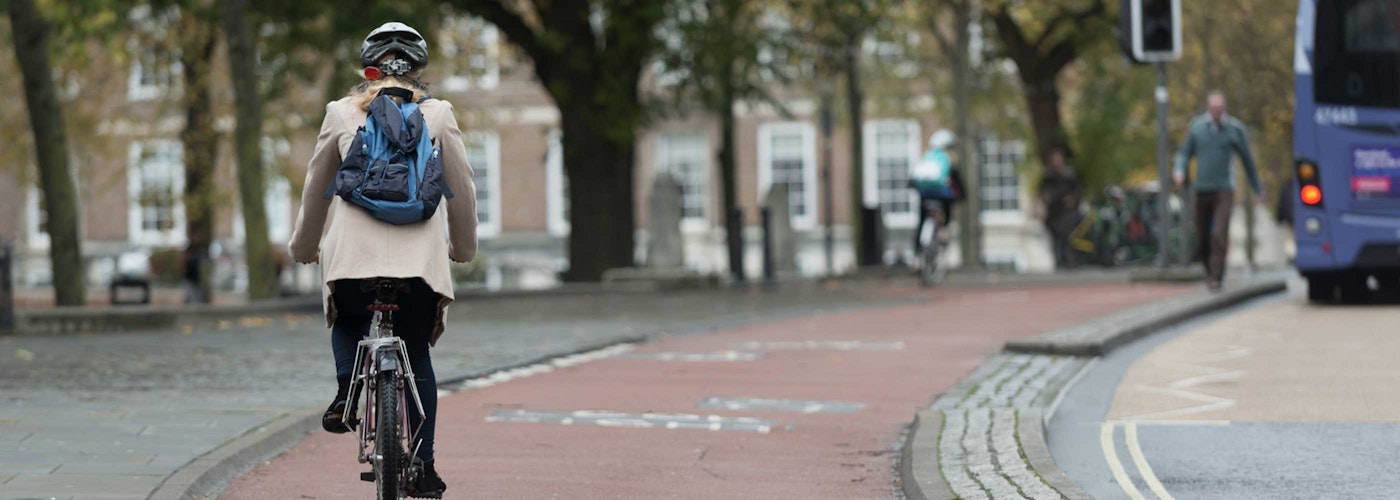
As Transport Planners, it is our goal to make active travel, such as walking and cycling, the preferred and most accessible method of movement. In London, development plans are proactively aligning with the criteria set forth by the ‘Healthy Streets Approach.’ What does this mean in practise? Put simply, healthy streets are delivered by ensuring that local infrastructure is attractive, safe and a place where people want to spend time.
To implement healthier streets, we as Transport Planners are proud to collaborate across project stages to develop not just a site, but the surrounding community’s infrastructure, too. The provisions we have introduced include cycle lanes, benches, lighting, and paving that is accessible for everyone.
By having this approach within development plans, pre-existing transport systems gradually adapt into ones that encourage higher levels of active travel. Providing this infrastructure acts as a catalyst in nudging people’s travel behaviours to ones that contribute to a low-carbon future, and this is something we are proud to be part of.
As you walk your local streets, we encourage you to contemplate the current level of accessibility and sustainability that you see in nearby transport networks. Can people cycle safely in your neighbourhood? Is the space clean and inviting, not just during the day but at night as well? Does it feel safe for children? Is the air clean to breathe? Is there provision for people of all accessibilities?
These are the type of questions we are asking ourselves as we enhance the built environment through our projects, and the questions we are proud to be providing solutions for.
Tags:
 Events


 News
News