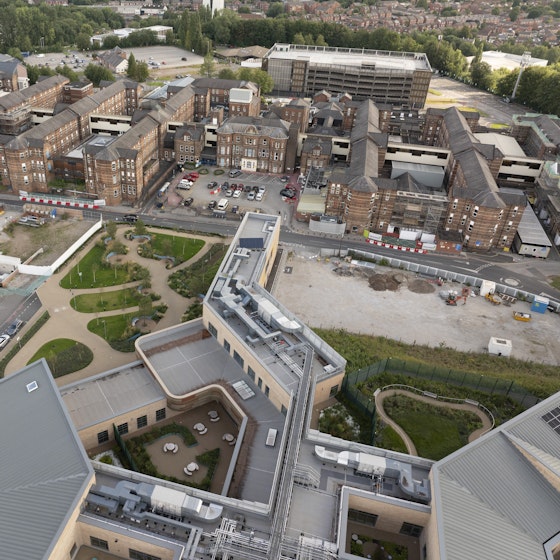
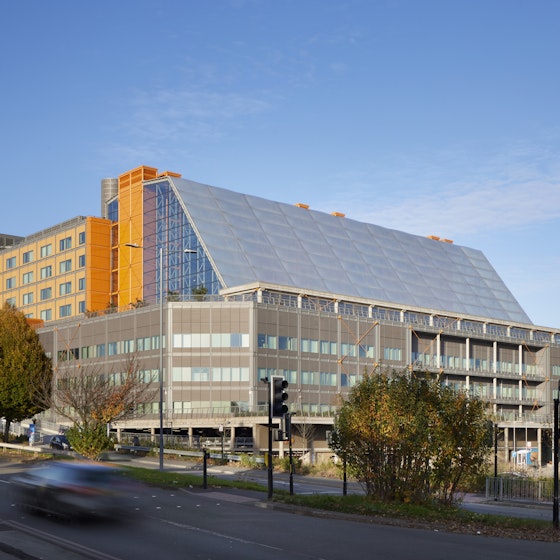
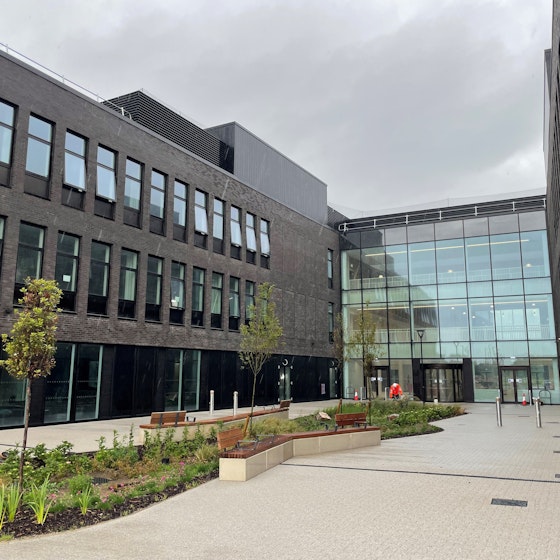
The Rob Burrow Centre for Motor Neurone Disease is a purpose-built facility located at Seacroft Hospital in Leeds bringing together specialist care, research and support services for MND under one roof.
Environmental works on this constrained site to enable expansion of the Mental Health Unit at Dorothy Pattison Hospital.
Healthcare - The North, England
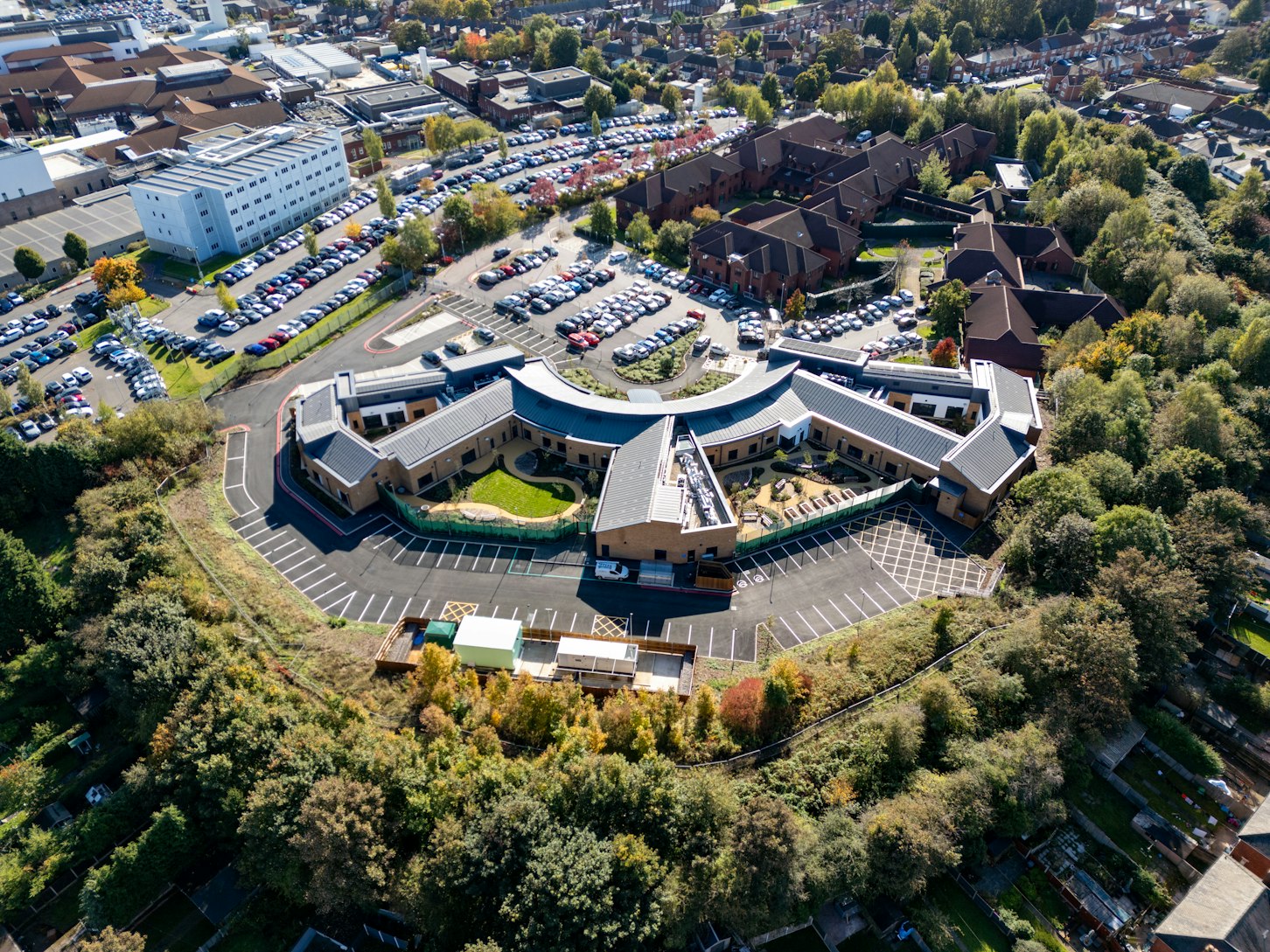
Curtins were appointed as engineering consultant on the proposed Mental Health Unit extension of Dorothy Pattison Hospital, which is located off Alumwell Close in Walsall. The proposed redevelopments were to replace the former renal unit with a single-storey mental health unit specialising as an older patient and dementia ward.
The site was a former reservoir owned by South Staffordshire Water Works, encircled by a bund. The reservoir was no longer recorded in 1938 but the bund was still present. By 1996, the plot of land was developed into its existing layout, now identified as Dorothy Pattison Hospital (a mental health hospital), with the bund still present along the southern, western and northern boundaries.
We provided the geo-environmental and geotechnical engineering solutions through the project timeline by providing a:
Phase 1 PRA Assessment
Coal Mining Risk Assessment
Phase 2 Site Investigation
Additional Ground Investigation for mine workings
Remediation Strategy
Remedial Validation Letter for removal of asbestos hotspot
Specification for Stabilisation of Shallow Mine Workings
Shallow Mine Working Stabilisation (Grouting) Verification Report
Earthworks Strategy for Reservoir Backfill
These services were to assist and enable Curtins’ structural engineering team to advance the proposed buildings on this development scheme.
The site is within a coal mining reporting area and a development high risk area, with past and probable shallow coal mine workings noted to be present beneath site. The site area was also recorded to have past underground coal mining in the south and northeast of the site from the Blue Flats Ironstone Seam.
Curtins’ ground investigation revealed the extent of coal across the site varying in thickness and depth encountered. Coal was also encountered at deeper depths of 20.00m bgl, and broken and fractured ground was also recorded during the drilling process. The extent of potential mine workings across the development area was inconclusive from the first stage of ground investigation, so an additional targeted ground investigation was undertaken to support Curtins’ structural engineering design and allow costs for the scheme to be adjusted where necessary.
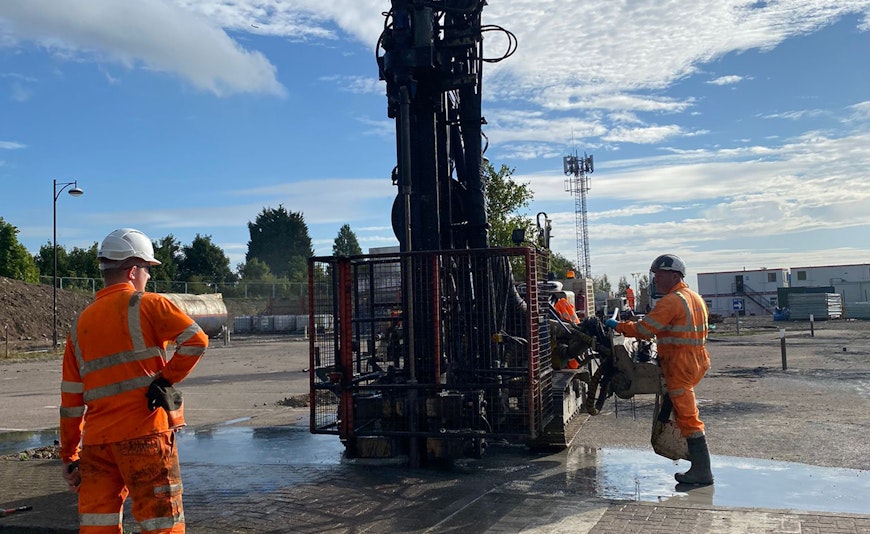
During the second stage GI a void was encountered within western extent of the site. Based on the depth and thickness of this, it was indicative of ironstone mining. A stabilisation operation by grouting took place, to mitigate risks from potential collapse and of surface instability arising from potential mine workings in the area.
Asbestos was identified during the ground investigation within a single location on site. Due to the unacceptable risk to future users, Curtins provided a remediation strategy implementing the removal of asbestos on site through a watching brief and validation letter.
Site Constraints: Phase 1 PRA Assessment noted the former reservoir and bund present on site through historical mapping. This was relayed to the client as potential obstructions for consideration for future proposed structural foundations. A concrete slab obstruction associated with the reservoir was encountered during the piling works and an earthworks strategy was adopted to overcome this and allow continuation of the piling programme.
Live Site: The site was present on an active hospital within a limited spaced car park. Curtins successfully undertook several phases of ground investigations through communication with the hospital to cause minimal disruption to the staff, patients and public.
Due Diligence: Limited prior information and lack of previous ground investigations within the proposed building footprints. We provided a tailored set of services from Phase 1 PRA stage through to construction of the hospital by providing additional ground investigation works, remediation/stabilisation and earthworks strategies to provide information. This allowed the project cost estimation to be refined.
Supervision: A qualified ground engineer remained present on-site full time during the drilling and grouting remediation works to oversee the execution of the stabilisation works specification. Precautionary hybrid secondary / test- positions around a previously recorded ‘void’ were implemented to mitigate against the risk from catastrophic ground subsidence in relation to shallow mine workings.
Let’s talk about your next project and how our experienced team can help
Find your nearest Curtins office
Contact