 Views
Views- Home
- News & Views
- Education and Skills in a Changing Economy
“If you looked into my very core, you’d see education.” With those words, Sureena Brackenridge MP - a former chemistry teacher, deputy head and now a member of the House of Commons Education Committee - set the tone for a Purpose Coalition roundtable last week.
Her message was clear: education sits at the heart of opportunity, but the sector is facing complex challenges with no easy answers.
It is estimated by Skills England that the UK will need 900,000 more skilled workers in priority sectors by 2030, while more than a quarter of all vacancies are already hard to fill because applicants lack the required skills, qualifications or experience.
This pipeline of talent begins in early careers, but access to quality careers guidance and inspiration is not equal across the country. In 2024/25, disadvantaged pupils remained 27.3 percentage points less likely than their peers to achieve grade 5 or above in English and maths, shaping later access to training, higher education and work. Alongside, over one million young people aged 16 to 24 are now not in education, employment or training.
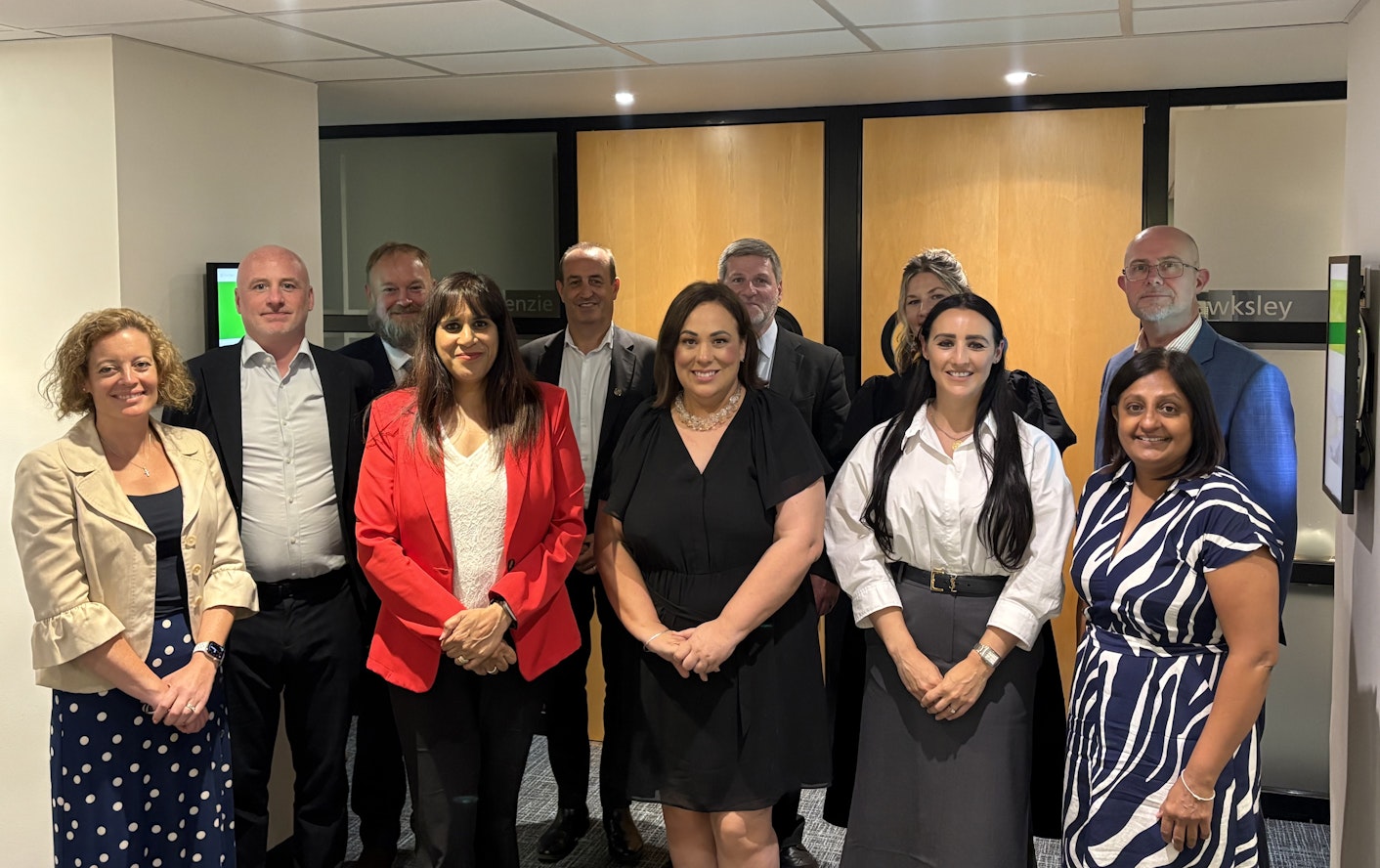
That is why Paula Sheriff, Senior Advisor at The Purpose Coalition and former MP for Dewsbury, brought together ten industry leaders in Westminster, including myself and my colleague Kate Clegg, for a focused discussion on skills, growth and opportunity.
Education and skills are fundamental to economic growth, social mobility and opportunity across the UK. At Curtins, we see this through two connected lenses: the education projects we deliver, and our commitment to creating grassroots opportunities for people from young people through to leadership – and every stage in between.
This roundtable focused on a critical question: how do we build a skills system that drives growth, opens pathways, removes barriers, responds to technology and delivers for local places?
Early years careers guidance
A key challenge emerged quickly: young people need broad, informed careers guidance, yet the support once available in many schools has been reduced or removed altogether.
Businesses can help close that gap, but doing so takes real commitment – in time, and funding. At Curtins, we are offering 70 work experience placements this year as part of our continued investment in a strong, sustainable pipeline of skills and talent for the industry, alongside apprenticeships across non-technical and technical disciplines.
We need fresh approaches that get us back into schools and continue inspiring young people.
Kate Clegg, Head of Communications and Curtins, comments, “During the Covid-19 pandemic, we knew that not being able to send our STEM Ambassadors into schools could affect career awareness, inspiration and role modelling.
"So, we adapted – developing online resources and social media storytelling that helped us reach a wider, more diverse group of students.
"With a social media ban for under-16s on the horizon, we will need fresh approaches that get us back into schools and continue inspiring young people to explore careers in construction and engineering."
STEM Teacher Placement Programme
This is one way we are working to maximise our impact as a medium-sized firm. Another is our STEM Teacher Placement Programme.
The programme gives KS3 teachers – Years 7, 8 and 9 – practical insight into engineering careers, enabling them to take real-world industry knowledge back into the classroom. It flips the traditional one-to-one student placement model on its head: by equipping teachers, it can reach dozens of students year after year.
Placements run over eight weeks, spanning a school term, and combine in-person and online sessions with 36 hours of learning. Funding from participating businesses helps cover supply teacher requirements.
Curtins are piloting the programme and will share the refined model through the Purpose Coalition. The ambition is simple: widen understanding of STEM careers and strengthen future talent streams into the industry.
Digital skills and EdTech
No conversation in 2026 can avoid AI, and this roundtable was no exception. Its impact on the workplace is already clear, with organisations looking to drive efficiency, improve decision-making and understand how machine learning can support people.
AI only predicts the next most logical answer based on data. But some of the best outcomes come from human judgement, creativity, lived experience and the ability to think beyond the rational or expected.
The strongest message around the table was not about technology replacing people. It was about the growing value of human-centred skills.
Kate adds, “AI is accelerating quickly, but there may come a point when access to large language models becomes more payment or subscription-led. That will sharpen decision-making around where AI genuinely adds value, and where people continue to outperform it.
"AI only predicts the next most logical answer based on data. But some of the best outcomes come from human judgement, creativity, lived experience and the ability to think beyond the rational or expected. That is where we need to focus future skills development - while also understanding how we train, challenge and use these tools responsibly."
Working together
The roundtable brought into focus the concerted effort needed by educational bodies, partners, local authorities and businesses to collaborate for a joined-up approach to skills, education and employment. There are pockets of this beginning successfully. The University of Salford shared how they are working with their local authority to ‘broker’ work experience placements for students – providing a central and consistent open-door to opportunity.
At Curtins, we will continue to work collaboratively, and prioritise providing both work and classroom-based experience to support strong routes from education into our industry for diverse and talented individuals, helping to build a better future.


 Events