 Views
Views- Home
- News & Views
- Walking Towards Net Zero
A few days ago, I walked from Temple Meads station back to my office near the SS Great Britain. I’ve walked this route a hundred times, but this time I saw it differently. The sun was out. People were out – lots of them, in bars, on boats, sitting on the harbour wall. People enjoying being in the city. And I realised that I was walking through 800 years of Bristol’s heritage: from the great Brunel train shed, past St Mary Redcliffe, across the docks and through the magnificent Queen Square, then on again to the historic ship: Victorian power, a medieval masterpiece, Georgian elegance and Victorian innovation.
But what of our projects now? Will our work last and be valued as much as the examples above? A building we start today might spend ¾ of its life in a Net Zero world, so we need to get it right. Our projects will be judged increasingly against carbon impact, social value, adaptability and cost: not the tallest tower or longest span. How will we deliver all this as we approach Net Zero in 2050?
As designers and constructors, we’re custodians of our city and need to take good decisions as it develops, enhancing our urban spaces so that people want to be in the city, keeping the good buildings that exist and modifying them sensitively, and building new only where justified. In a climate emergency, we need to work with what we’ve got where we can – we no longer have the luxury of just starting again.
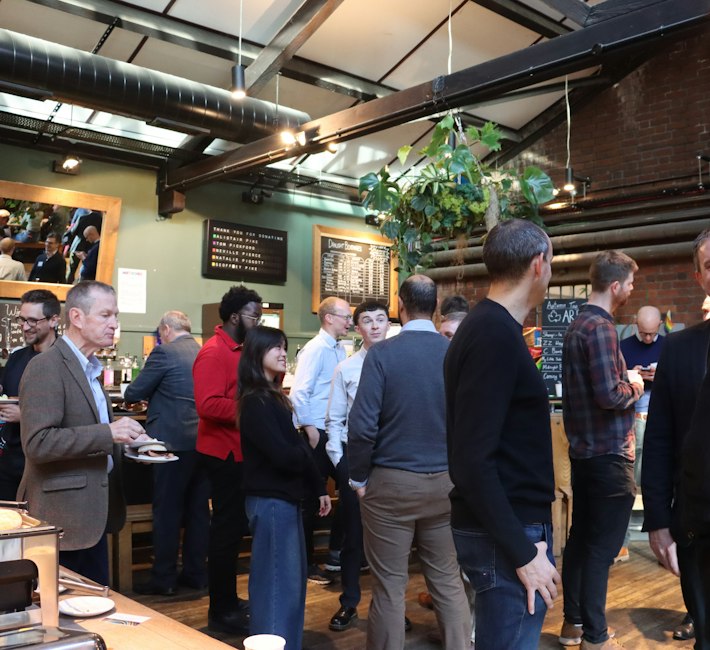
A few examples from my walk – all of which achieve success in different ways. Near my office a contaminated gasworks site has been converted to housing, along with a new dock inlet surrounded by cafes. Wapping Wharf has created an instantly-valued new neighbourhood. The 200-year old Albion Dry Dock is being regenerated and used for shipbuilding again. And O&M Sheds, pictured below and one of Curtins’ latest retrofit projects, have been repaired, retained and refurbished, opening out the buildings to face the street and the harbour to begin their third or fourth new life – this time as a food and music venue.
I imagine an engineer walking this route in 25 years and writing about what the project teams did in the 2020’s to make our city ready for Net Zero. How well-considered and responsible our designs were, how we worked with what was available, renewed it and made it last.
I wonder how we’ll be judged? Will we meet the challenge? It’s really difficult, but a huge opportunity for us now to grasp.
Next week is Curtins’ first annual ‘Impact Week’, a time when we share examples of where we’ve made progress in our thinking as well as setting out our targets for going forwards. This year we’re focussing on lowering our environmental impact. We’re inviting our colleagues to identify just one thing they can do differently for the week, but hopefully into the future too, as we explore the collective impact we can have through our individual choices.
Tags:


 Events
 News
News