 Projects
- Home
- News & Views
- Insite in Action: Henry Cotton Building
Insite in Action: Henry Cotton Building
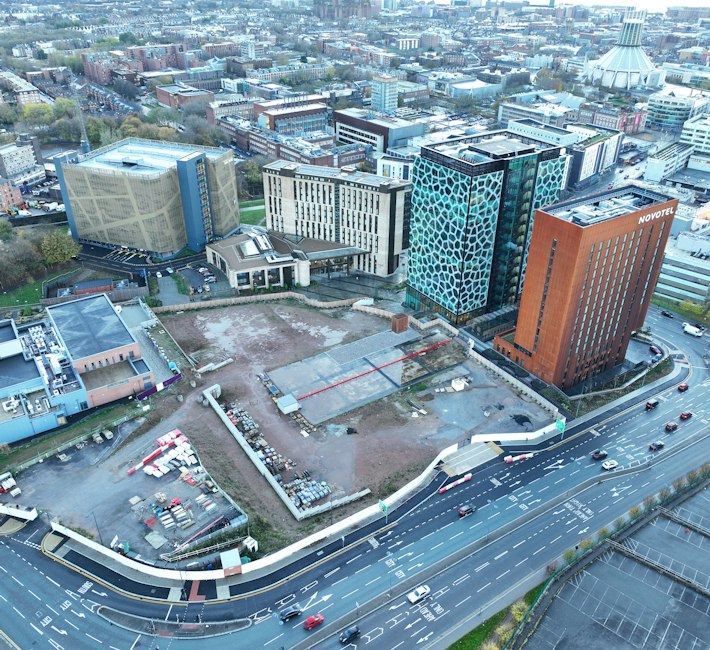
We are supporting the major redevelopment of the Henry Cotton Building at Liverpool John Moores University, transforming a 1980s asset into a contemporary, energy efficient learning environment.
Through our Insite approach at RIBA Stages 0–3, Curtins provided early-stage insight into the building’s structural typology, constraints, and opportunities helping LJMU and the wider design team de-risk strategic decisions and shape a viable, value-driven brief.
Overcoming challenges
A key challenge from the outset was the limited availability and reliability of existing building information, typical of buildings of this era, requiring a carefully planned, multi-phased approach to structural investigation. Progressive investigations were undertaken and refined through RIBA Stages 2, 3 and 4, enabling risks to be better understood, tested, and mitigated as the design evolved. This iterative process allowed the team to build confidence in the retained structure while avoiding unnecessary intervention and cost.
Working together with Curtins' Geotechnical team
In parallel, targeted geotechnical and foundation investigations were undertaken to establish robust soil parameters and foundation performance characteristics. This information informed detailed settlement analysis and assessment of foundation capacity. Importantly, these studies confirmed that the existing foundations were adequate to support the proposed increased loads, avoiding the need for significant strengthening works and delivering both cost and programme efficiencies.
A critical component of this early and ongoing work was the proactive consideration of temporary works and construction methodology, ensuring that demolition, sequencing, and major structural interventions could be delivered safely and efficiently within the constraints of the existing building. This evolving understanding has been fundamental in defining a robust and deliverable strategy.
Next steps
Curtins continues to act as Civil and Structural Engineer through RIBA Stages 4–6, supporting detailed design development, coordination, and construction delivery. Working in close collaboration with both the contractor and the design team particularly through RIBA Stage 4 we are ensuring that permanent and temporary works are fully integrated, aiding buildability, reducing construction risk and supporting programme certainty.
The scheme involves extensive internal strip-out works, including partial demolition of the upper floors, followed by significant rebuilding and major structural interventions. Given the complexity of the works, a well-developed and continuously coordinated temporary works strategy is essential to maintaining structural stability, protecting retained elements, and enabling efficient construction sequencing.
The future of the building
Once complete, the revitalised building will provide high-quality, future-ready teaching and learning environments, including new lecture theatres, featuring a distinctive Harvard-style space, alongside flexible teaching rooms, digitally enabled learning spaces, student social areas, and enhanced staff facilities.
A new, highly visible entrance, defined by a large, glazed foyer, will significantly enhance accessibility and arrival experience, reinforcing the building’s role as a key gateway to LJMU’s city campus.
This project demonstrates how early and iterative insight particularly in understanding existing buildings, structural behaviour, ground conditions, evolving risk, and temporary works requirements can successfully de-risk complex transformations, unlocking value, enhancing placemaking, and delivering sustainable outcomes from existing assets.
 Events

 Views
Views